ASHWAGANDHA
Withania somnifera
An adaptogen used in India by Ayurvedic Medicine for over 3,000 years, ashwagandha is classified as a Rasayana or rejuvenating tonic believed to promote longevity, vitality, and overall well-being. In Sanskrit, the name “ashwagandha” means “smell of a horse”, which refers to both the herb’s odor and its medicinal use to impart the strength and stamina of a horse.
Ashwagandha is now a well studied herb with scientific support for balanced energy, endurance, stress management, inflammation and improved cognitive function; among promising results is the treatment of thyroid, diabetes, and cancer. While ashwagandha has gained a reputation as a calming herb useful for anxiety and sleep, many people experience increased energy due to the herb’s support of the adrenal glands, iron content, and ability to increase VO2 max. For more information on scientific research of ashwagandha, see below.
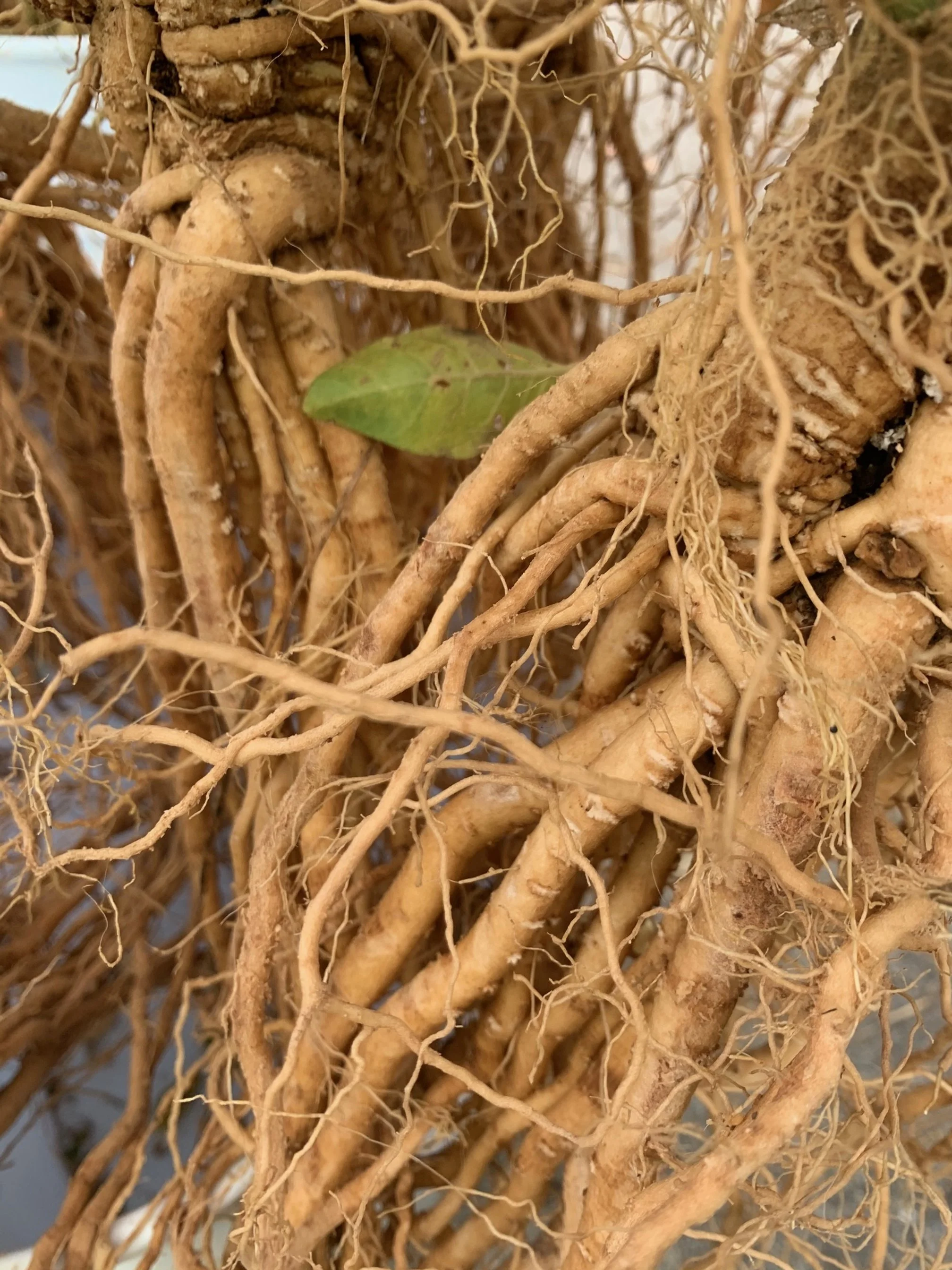
Ashwagandha bushes stand around three feet high. The root is the part traditionally used in India, however, the leaves and berries can also be consumed. The root is the part to use for everyday health maintenance and longevity; for medical conditions consult the guidance of a health practitioner. The leaves should be used on a dose dependent basis and may support anti-cancer action. The berries make a novelty beverage that produces a euphoric effect similar to intaking increased oxygen, and they should be used in moderation. As a whole, ashwagandha has pronounced medicinal activity in the body and is more potent than other herbs in the category of “culinary herb with medicinal benefits” such as basil, oregano, rosemary, etc. Therefore, being conscious of this herb in terms of dosage and your personal health profile is necessary. With that said, the root has a long history of use as a tonic herb and is very beneficial for managing modern day stress.
-
COMMON NAMES
Ashwagandha, Indian Ginseng, Winter Cherry
-
PLANT FAMILY
SOLANACEAE
The Nightshade Family
-
NATIVE REGION
Southeast Asia & Africa
-
HABITAT
Prefers rich, dry to medium moisture, well drained soil in full sun
-
PARTS USED
Root, Leaves, Berries
-
PROPERTIES
Adaptogen, energy and hormone balancing, immunomodulator, anti-inflammatory
PREPARATION
FLAVOR PROFILE: Root: Neutral, woody, earthy; Leaves: Bitter; Berries: Very bitter, tart tomato
PAIRING: Root: Blend with aromatic herbs to lift flavor. Works well with apple or pear juice; also combines with coffee, cocoa and green or black tea. Use cayenne or black pepper to enhance effect. Leaves: Use aromatic herbs to mask bitter flavor. Berries: Combine with honey to offset bitter flavor, apple or pear, lemony herbs, and green tea.
METHOD: A fresh ashwagandha root is low in moisture content and will dry very quickly, usually within a few days. Whether it’s fresh and bendable or dried and stiff, it needs to be cut into small pieces as the first step. The leaves are best pulled off the bush and immediately extracted in spirits or vinegar. It’s not harmful to dry them, but they do not add much in a tea blend where the root would be preferred. The leaves are used as intentional medicine not as a tisane, and a liquid extract is much easier to track dosage. The berries while fresh can be mashed in honey to make a paste. Drying them is also an option.
Ashwagandha root should be dried completely and stored in a dark, dry place. Do not store in the refrigerator as any condensation will cause mold. It’s ok to store the fresh, bendable roots in the freezer. However, if you’re making a powder be sure the root is thoroughly dry before processing it.
Here on the East Coast in the field, unsprayed ashwagandha leaves are munched on by flea beetles; they do not harm the plant but unavoidably, there will be pin holes left on the leaves! We are often asked if the bushes can be replanted or root propagated from cuttings; sadly, this will not work. The harvested roots are very woody and dry out quickly much like a tree; and this type of root does not have “nodes”, “eyes”, or sprouts at the crown to segment. You can, however, dry the seeds from ripe berries to germinate seedlings.

-
Lay the whole root or cut pieces out to dry in regular ambient air. It will dry quickly; using heat to dry is unnecessary unless the conditions are high humidity. To prevent mold, protect the root from moisture and humidity once it has dried completely.
Ashwagandha root is most efficiently used as a powder because there is more relative surface area (to make contact with water or other extract medium). That said, it’s a very woody root and is not easily cut or processed. Use shears or heavy scissors to cut into 1-inch pieces. Then use a Vitamix, Ninja, or Nutribullet to breakdown further. The root must be completely dry. To get a fine powder, pass through a sifter.
One half teaspoon of fine powder is equal to 1 gram.
Cutting into small pieces is also an option, however the root will need to be boiled to get potency from the extraction.
Use a grams scale to determine weight of cut pieces.
-
A decoction is made with cut pieces of the root and an infusion can be made with the powder. If brewing an herbal blend, the ashwagandha root would go in first and can be boiled with other roots such as ginger. Then, turn off the heat and let the temperature lower to 160-180 degrees before adding leafy aromatic herbs. Use 1 gram per 8 ounces of water.
Using Whole Root: Cut the root into small 1/4 inch pieces. Make a pile and take a hefty pinch per 1 cup of water. You will need to boil the chunky pieces so it’s better to do at least 2 cups at a time, adding extra water (1 oz per 1 cup) for the boiling off. Simmer for 15-20 minutes with the lid on and let sit for 5 more, then strain and serve. Add tea leaves or fresh herbs at the 5 minute resting point to infuse flavor.
Using Powder: Stir into hot water or another tea. It can be boiled with other herbs to make a larger batch. The fine granulation allows it to extract quickly; simmer as little as ten minutes or up to several hours if the other herbs require longer time. One half teaspoon of fine powder is equal to 1 gram. Use 1 to 2 grams per day. There will be some sediment because it’s a woody root, use a metal mesh coffee strainer or filter if you prefer to remove this.
The leaves: Not traditionally used as a tisane. Make an acetract or tincture and keep track of dosage.
The berries: If fresh, mash and add hot water; honey reduces bitterness. If dried, grind into a powder and add hot water. Keep track of dosage, do not exceed 1 tablespoon of berries per day. The berries are very seedy, use a tea strainer.
-
The Root: //add water + boil
The Leaves:
The Berries:
-
The Root:
The Leaves:
The Berries:
-
The Root:
The Leaves:
The Berries:
-
Made by combining the powder of dried root, leaf, or berry with honey.
Use a 1:1 ratio
Measure by volume the amount of powder you’re planning to use. For example ¼ cup = 2 ounces (30 grams root powder).
Add the ashwagandha powder to a larger Ball jar; then add the same amount of honey. Stir well.
Over time the powder will absorb the honey and harden. Add more honey if you desire a thinner “spoonable” texture. This will, however, reduce your powder dosage amount - the more honey you add.
In a 1:1 ratio (50% powder and 50% honey) 1 teaspoon equals 1 gram of ashwagandha powder.
Stir into hot water to make a tea.
As the electuary hardens you can roll into balls and dust with cinnamon to eat or drop into a beverage.
-
Ashwagandha root is not generally extracted in plain honey to make a syrup (for example, infusing and then straining out the herb) because it needs to be heated, and honey alone should not be heated above 110 degrees. It’s better to extract in vinegar or alcohol spirits and then add the honey.
Oil infusions are the same situation where heating is a problem. In most cases, it does not make sense to extract ashwaghandha in oil. Rather, extract in vinegar or alcohol spirits and then blend with an oil while also using an emulsifier.
The solution to both of these situations is an electuary, which is taken as a paste of the powder (the herb is not strained out of the honey). An oil paste can be made in the same style as an electuary.
RECIPES


coming soon!

MEDICINAL QUALITIES
-
Adaptogenic
Anxiolytic
Neuroprotective & Nootropic
Anti-inflammatory
Immunomodulatory
Antioxidant
Endocrine Modulator
Reproductive Tonic
Anti-cancer
Hypoglycemic
Cardioprotective
Anabolic / Muscle-building
-
Withanolides (Steroidal lactone) - anti-inflammatory, anti-cancer, adpatogenic, neuroprotective
Withanosides (Triterpenoid steroidal lactone) - neuroregenerative and cognitive enhancing
Withanine (Alkaloids) - mild sedative and calming effects
Sitoindosides (Steroidal saponin) - adaptogenic, anti-stress, neruroprotection, immunostimulation
Flavonoids - antioxidant
Choline - brain and nervous system health
Iron - blood building, oxygen transport
Amino acids - aspartic acid, proline, tyrosine, alanine, glycine, glutamic acid, cysteine, and tryptophan
-
The root is a tonic herb in Ayurveda and as such can be used on a regular basis. The leaves should be used dosage dependently with the guidance of a health practitioner and the berries on a limited basis, not to exceed one tablespoon per day.
Ashwagandha can lower blood pressure, which may cause dangerously low blood pressure (hypotension) if taken with high blood pressure medications like beta-blockers, ACE inhibitors, or diuretics.
Ashwaganha beneficially affects the endocrine system; however, while on hormone regulating medication (thyroid, pancreas, etc.) dosage may need to be adjusted under the guidance of a health practitioner.
Ashwagandha is generally considered safe with hormonal birth control; however, interactions are possible.
Ashwagandha can increase energy in some people; when using other energy enhancing herbs such as maca, rhodiola, ginseng, and chaga the dosage should be split between the herbs to avoid overstimulation.
-
For health maintenance use 1 to 2 grams per day.
The safe upper limit of dosage is 4 to 6 gram per day. This amount would be used when working on health conditions under the guidance of a healthcare practitioner. Herb-drug interactions should be evaluated when using this herb.
The most notable side effect of the root is feeling light-headed (likely due to blood pressure lowering effect) or daytime sleepiness; reduce dosage if this occurs.

SCIENTIFIC STUDIES
-
-
Item description
-
Item description
-
Item description
-
Item description
-
Description text goes here
-
Item description
-
Item description
-
Item description
-
Description text goes here
-
Item description
-
Description text goes here